



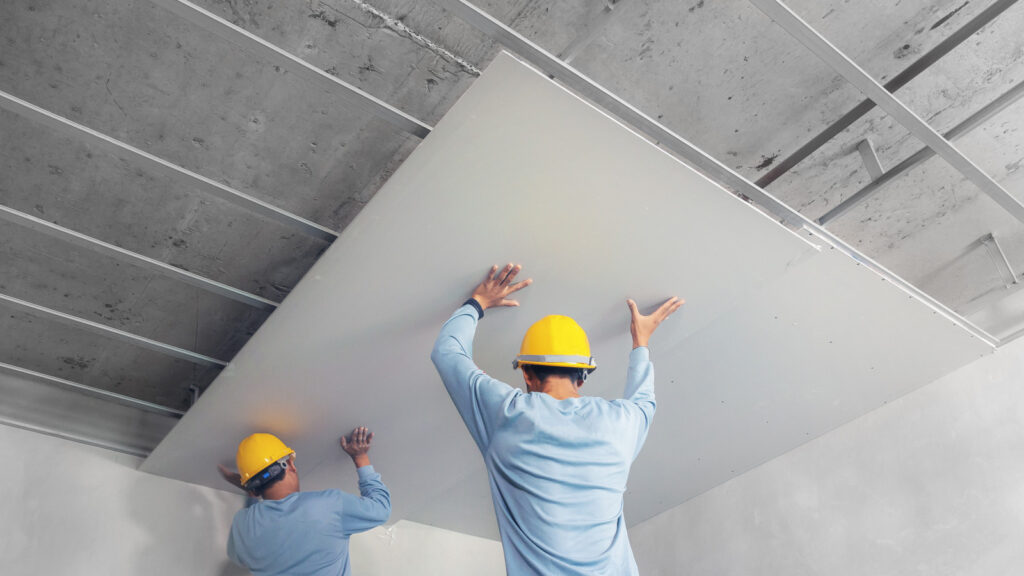
Our company offers a specialized service in gypsum board suspended false ceiling installation. This involves creating a metal framework that is suspended from the ceiling using wires and rods, which is then leveled and secured to provide a stable base for the gypsum boards. The gypsum boards used for the false ceiling are typically 12.5mm thick and come in standard sizes of 1200mm x 2400mm. They are cut to size and installed within the framework using screws. Once installed, the joints between the gypsum boards are taped and filled with joint compound to create a smooth and seamless surface. The surface is then sanded and finished with a coat of primer and paint, providing a range of finishes and textures to choose from that can be customized to match the client’s design preferences. Our gypsum board suspended false ceilings offer several benefits, including durability, fire resistance, and sound insulation, and can also accommodate lighting fixtures, air conditioning ducts, and other electrical and mechanical fixtures. Our team of skilled professionals ensures that the installation specifications are met to provide a reliable and professional service that helps our clients achieve their desired design aesthetic while improving the quality of their interior environment.
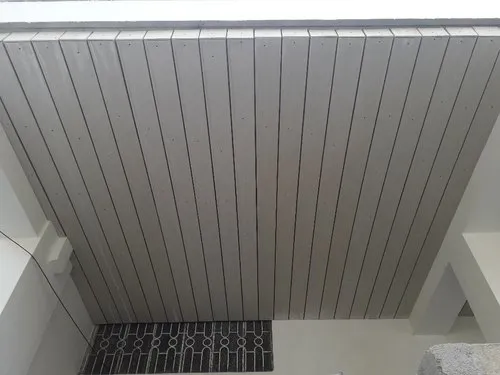
Cement board suspended false ceilings are a popular choice for commercial and industrial spaces due to their durability, fire resistance, and moisture resistance. They are made of a composite material that includes cement, sand, and cellulose fibers. Cement board ceilings can be used in a variety of settings, including high-humidity environments like kitchens and bathrooms, as they are resistant to water damage and mold growth. Additionally, they provide excellent sound insulation, making them a great choice for spaces where noise control is important. Cement board ceilings can also be customized with different finishes and textures to match the design aesthetic of the space. Overall, their strength and versatility make them a reliable and practical choice for suspended false ceiling installation. Installation procedure for cement board ceiling is same as gypsum board suspended false ceiling, just change is that, the jointing and finishing procedures are little different from gypsum board ceiling finishing procedure. In cement board ceiling jointing and finishing procedures, we have to add some resins in finishing material for giving more strength to cement board joints, because cement board materials have heard surface and have more weight then gypsum board.
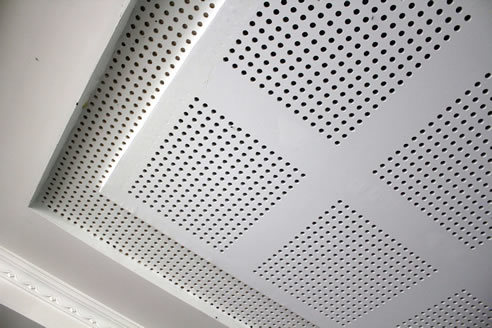
Perforated gypsum board ceilings are commonly used in commercial and public spaces due to their numerous advantages. The perforations in the ceiling panels allow for sound to pass through and be absorbed by the acoustic insulation behind the panels, resulting in improved sound quality and reduced noise levels. Additionally, these ceilings offer a visually pleasing design, with various perforation patterns and finishes available. They are also fire-resistant, easy to install and maintain, and can improve the overall indoor air quality by reducing the concentration of volatile organic compounds (VOCs). Overall, perforated gypsum board ceilings are a practical and cost-effective solution for enhancing the functionality and aesthetics of various indoor spaces. Installation procedure for Perforated gypsum board suspended false ceiling is same as plain gypsum board and cement board, but we have large variety for Acoustic materials in our stocks, all have different procedures of installation as par their specifications of installation.. like Exposed grid ceiling, Clip in ceiling, Modular ceiling etc. Our Acoustical Solutions services gives our customers total solutions for their requirements regarding sound absorbing and sound traveling from one room to another.
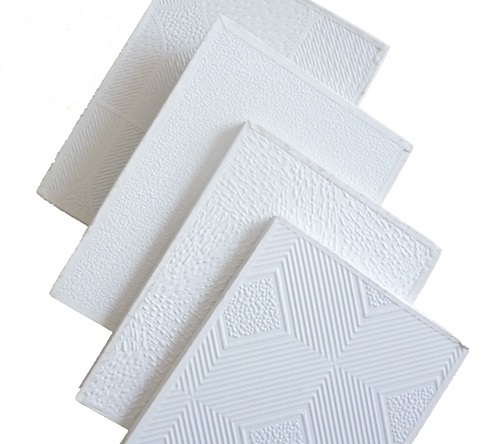
Vinyl laminated gypsum board ceiling is a type of false ceiling that offers various advantages such as durability, moisture resistance, and aesthetic appeal. These ceiling panels are made of a gypsum core that is laminated with a vinyl layer on both sides, providing a smooth and glossy finish. The vinyl layer also offers resistance to moisture, making it ideal for use in areas with high humidity. The vinyl layer can be customized to achieve a variety of patterns, colors, and textures, allowing for greater design flexibility. Additionally, vinyl laminated gypsum board ceilings are easy to install and maintain, making them a practical and cost-effective choice for enhancing the interior of any space.
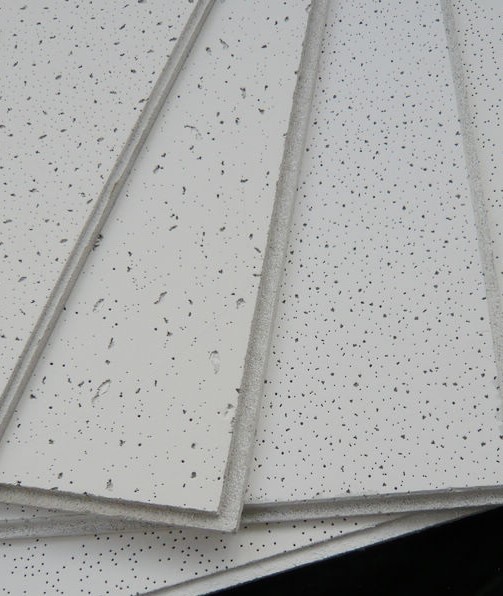
Mineral fiber board ceiling is a popular choice for commercial buildings due to its sound-absorbing properties and fire resistance. It is made from natural and synthetic minerals blended with other materials and is available in a range of sizes, textures, and finishes. The benefits of mineral fiber board ceiling include improved acoustics, thermal insulation, durability, and easy maintenance. It is also a cost-effective solution that can enhance the aesthetic appeal of any interior space.
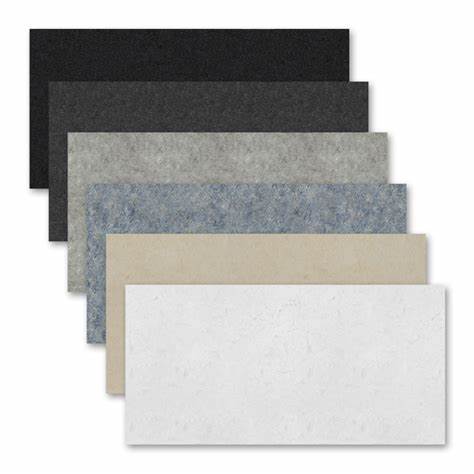
Acoustical board ceilings are commonly used in commercial and industrial settings due to their sound-absorbing properties. They are also known for their fire resistance, durability, and ease of installation. Acoustical board ceilings are available in various materials such as mineral wool, fiberglass, and recycled content, and come in a range of designs and finishes to suit different design preferences. They are an ideal choice for spaces that require optimal acoustic performance, such as conference rooms, auditoriums, and classrooms.
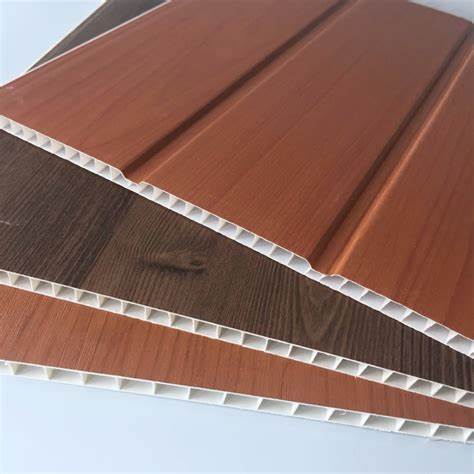
PVC ceiling is a type of false ceiling that consists of interlocking PVC panels that are laminated with different finishes, such as wood, marble, or metallic finishes. It is a popular choice for residential and commercial spaces due to its versatility, durability, and affordability.
Some of the advantages of PVC ceiling include:
- Easy installation: The interlocking panels are lightweight and can be easily installed by one person, making it a quick and hassle-free installation process.
- Low maintenance: PVC ceiling requires minimal maintenance, as it can be easily cleaned with a damp cloth or sponge.
- Moisture-resistant: PVC ceiling is moisture-resistant, making it ideal for use in areas with high humidity levels, such as bathrooms and kitchens.
- Cost-effective: PVC ceiling is an affordable option compared to other ceiling materials like wood or plasterboard.
The installation specifications for PVC ceiling typically involve the following steps:
- Preparation: The area where the ceiling will be installed is measured and prepared by ensuring that the surface is clean, level, and free of any debris.
- Framing: A framework of wooden or metal strips is fixed to the ceiling, creating a grid-like pattern.
- Installation: The interlocking PVC panels are inserted into the framework, starting from one corner and working across the ceiling. The panels are secured in place using screws or adhesives.
- Finishing: The ceiling is finished by installing trim pieces around the edges to cover any gaps between the panels and the walls.
Overall, PVC ceiling is a versatile and cost-effective option that provides a wide range of design options and is suitable for a variety of applications.