




Gypsum boards are available in different sizes, thickness, and types. The standard sizes of gypsum boards are 4 feet wide by 6 feet long, and the thickness can vary from 8mm to 15mm. The most commonly used thickness for interior walls is 12.5mm, while 9.5mm thickness is preferred for ceilings and partitions.
Gypsum boards are widely used in offices and homes for interior design purposes. They are popularly used for false ceilings, partition walls, and wall paneling due to their versatility and affordability.
For false ceilings, gypsum boards are suspended from the ceiling using a metal frame, creating a clean and seamless look. They can also be used to conceal ductwork and electrical wiring while providing easy access for maintenance and repair.
In partition walls, gypsum boards offer a cost-effective solution for creating separate spaces within a room. They are easy to install, and their sound-absorbing properties make them ideal for creating quiet and private spaces in busy offices or homes.
Gypsum board wall paneling is another popular use of gypsum boards in interior design. They can be used to create accent walls, wainscoting, and other decorative elements, providing a stylish and affordable alternative to traditional wall finishes.
The advantages of using gypsum boards in interior design are numerous. Gypsum boards are lightweight, easy to install, and require minimal finishing, making them a cost-effective solution for construction projects. They are also fire-resistant, sound-absorbing, and can be easily painted or wallpapered to match any décor. Additionally, gypsum boards are environmentally friendly, as they are made from natural materials and can be recycled after use.
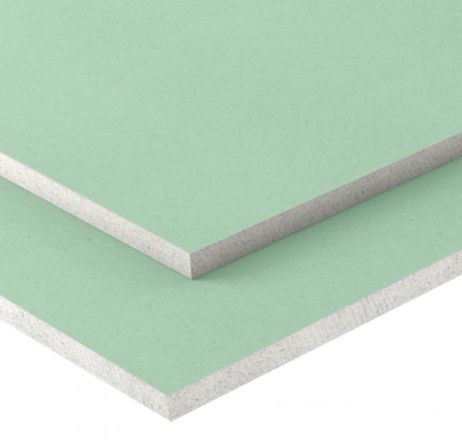
Moisture-resistant gypsum board, also known as greenboard or blueboard, is a special type of gypsum board designed to be used in areas that are exposed to moisture or high humidity levels, such as bathrooms, kitchens, and laundry rooms.
The core of moisture-resistant gypsum board is made from the same gypsum material as regular gypsum board, but it is treated with additives that make it resistant to moisture. The board is also covered with a special water-resistant paper facing that helps to prevent moisture from penetrating into the gypsum core.
Moisture-resistant gypsum board is typically available in green or blue colors, which distinguishes it from regular gypsum board. The green or blue color is a result of the water-resistant paper facing, which is treated with a special coating that helps to repel water.
The advantages of using moisture-resistant gypsum board are numerous. It provides a durable and moisture-resistant surface that is ideal for areas that are exposed to water or high humidity levels. It also helps to prevent the growth of mold and mildew, which can be a problem in areas with high moisture levels.
However, it is important to note that moisture-resistant gypsum board is not waterproof and should not be used in areas that are consistently exposed to water, such as shower stalls or swimming pool areas. In these areas, a waterproof backing material, such as cement board or a membrane system, should be used in conjunction with moisture-resistant gypsum board.
In summary, moisture-resistant gypsum board is a specialized type of gypsum board designed for use in areas that are exposed to moisture or high humidity levels. It provides a durable and moisture-resistant surface that helps to prevent the growth of mold and mildew and is an ideal solution for bathrooms, kitchens, and laundry rooms.
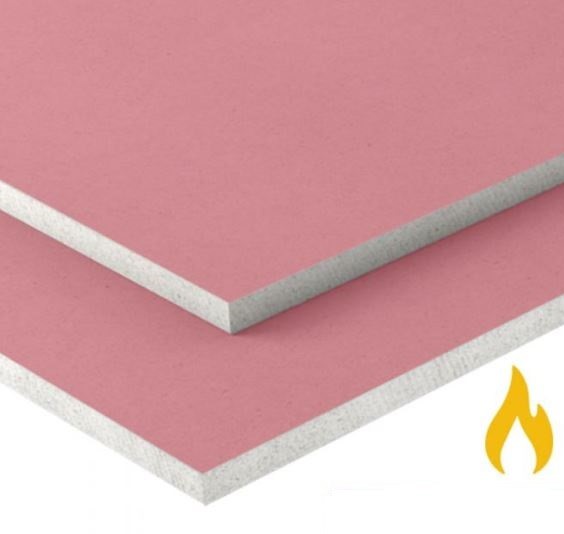
Fire-resistant gypsum board, also known as Type X gypsum board, is a special type of gypsum board designed to provide greater fire resistance than regular gypsum board.
The core of fire-resistant gypsum board is made from the same gypsum material as regular gypsum board, but it is treated with glass fibers and other additives that improve its fire resistance. The board is also covered with a special fire-resistant paper facing that helps to protect the gypsum core from heat.
Fire-resistant gypsum board is designed to be used in areas that require greater fire resistance, such as building corridors, stairwells, and other areas that serve as fire exits. It is also used in multi-family dwellings, high-rise buildings, and other commercial buildings that are required by code to meet specific fire ratings.
The advantages of using fire-resistant gypsum board are numerous. It provides a durable and fire-resistant surface that can help to slow the spread of flames and reduce smoke and toxic gas emissions during a fire. It can also help to provide extra time for occupants to evacuate a building in the event of a fire.
However, it is important to note that fire-resistant gypsum board is not fireproof and will eventually succumb to the heat of a fire. It is designed to slow the spread of flames and provide extra time for evacuation, but it is still important to have a comprehensive fire protection plan in place.
In summary, fire-resistant gypsum board is a specialized type of gypsum board designed to provide greater fire resistance than regular gypsum board. It is an important component in fire protection systems and is used in areas that require greater fire resistance, such as building corridors, stairwells, and other areas that serve as fire exits.
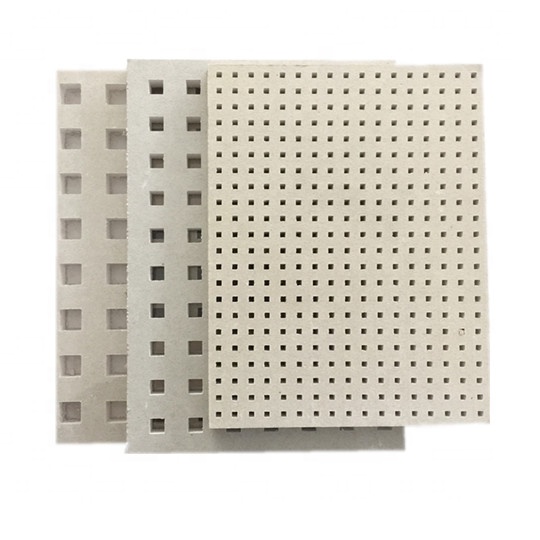
Perforated gypsum board is a type of gypsum board that is designed with small holes or perforations in the surface. The perforations can be in various shapes and sizes, such as round, square, or slotted, and they can be arranged in different patterns to create a decorative effect.
Perforated gypsum board is primarily used in acoustic applications, such as in auditoriums, concert halls, and recording studios. The perforations in the surface of the gypsum board help to absorb sound waves, reducing the echo and reverberation in the room. This makes it easier to hear speech and music and creates a more comfortable listening environment.
Perforated gypsum board is available in different thicknesses, depending on the degree of sound absorption required. Thicker boards with larger perforations will provide greater sound absorption than thinner boards with smaller perforations.
In addition to their acoustic properties, perforated gypsum boards can also be used for decorative purposes. The perforations can be arranged in various patterns and shapes, creating a unique and visually appealing surface that can be painted or finished to match any decor.
The advantages of using perforated gypsum board are numerous. They provide a cost-effective solution for improving the acoustics of a room, and they are easy to install and maintain. They are also environmentally friendly, as they are made from natural materials and can be recycled after use.
In summary, perforated gypsum board is a type of gypsum board that is designed with small holes or perforations in the surface. It is primarily used in acoustic applications to absorb sound waves and reduce echo and reverberation in a room. Perforated gypsum board can also be used for decorative purposes, providing a unique and visually appealing surface that is easy to install and maintain.
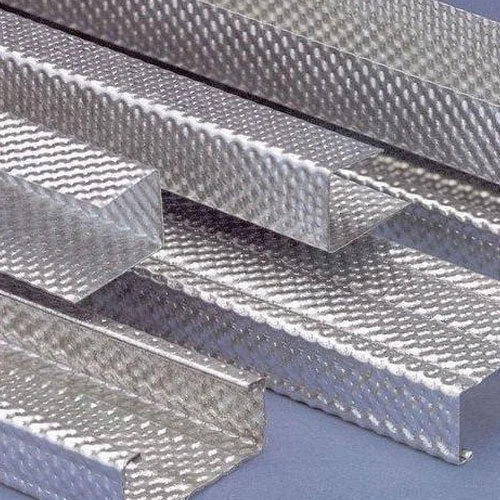
The metal channels or frames are designed to create a grid-like structure that supports the gypsum boards. The channels or frames are typically installed in a perpendicular or parallel pattern, depending on the design of the false ceiling. The channels or frames are also spaced apart at regular intervals to provide adequate support for the gypsum boards.
Before installing the metal channels or frames, it is important to prepare the ceiling surface by removing any debris or loose material. Once the ceiling surface is clean, the metal channels or frames can be attached to the ceiling using screws or hangers. The spacing and placement of the metal channels or frames should be determined based on the size and weight of the gypsum boards.
Once the metal channels or frames are in place, the gypsum boards can be installed onto the framework using screws or clips. The edges of the gypsum boards can be finished with metal trims or plaster to create a clean and finished look.The framing work of a gypsum board false ceiling provides several advantages over traditional plaster ceilings. Gypsum board false ceilings are lightweight, easy to install, and can be easily modified or removed. Additionally, the use of metal channels or frames provides excellent support for the gypsum boards, resulting in a stable and durable false ceiling structure.
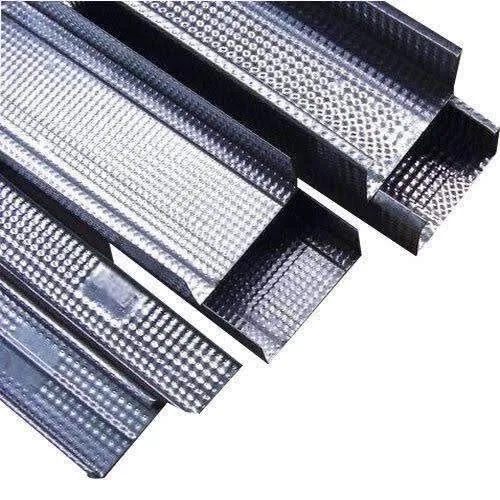
G.I. metal framing is a common material used for the framing work of gypsum board partitions. The G.I. (galvanized iron) metal studs and channels are made of galvanized steel that has been coated with zinc to protect against corrosion.
The G.I. metal studs and channels are available in various sizes and are designed to create a grid-like structure that provides the necessary support for the gypsum boards. The metal studs are vertical members, while the metal channels are horizontal members that connect the metal studs together.
The G.I. metal framing is installed by attaching the metal studs to the floor and ceiling using screws or anchors. The metal channels are then attached to the metal studs, creating a stable framework for the gypsum boards.
Once the G.I. metal framing is in place, the gypsum boards can be attached to the framework using screws or clips. The edges of the gypsum boards are then finished with joint tape and joint compound to create a smooth and seamless surface.
The use of G.I. metal framing for gypsum board partitions offers several advantages. G.I. metal framing is durable, resistant to moisture and fire, and provides excellent support for the gypsum boards. Additionally, G.I. metal framing is lightweight and easy to install, making it an ideal choice for partition systems.
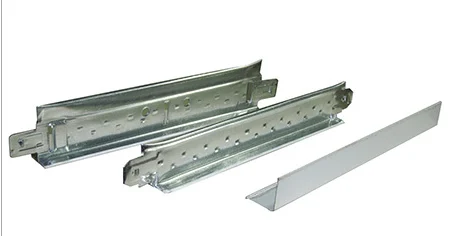
G.I. (galvanized iron) powder-coated modular ceiling frames are a popular choice for modular ceiling installations in commercial and industrial buildings. These frames are made of G.I. metal that has been treated with a powder coating to provide additional durability and resistance to corrosion.
The powder coating process involves applying a dry powder to the surface of the G.I. metal frame and then baking it at a high temperature to create a hard, protective layer. The result is a durable, scratch-resistant finish that is resistant to moisture, chemicals, and UV rays.
G.I. powder-coated modular ceiling frames offer several advantages for modular ceiling installations. They are lightweight, easy to install, and offer excellent support for ceiling tiles or panels. Additionally, they are highly durable and resistant to corrosion, making them ideal for installations in harsh or humid environments.
Powder-coated modular ceiling frames also come in a variety of colors, allowing for customization to match the aesthetic of the building’s interior. This feature can be particularly important for installations in public areas, such as lobbies or conference rooms, where the appearance of the ceiling can be an important aspect of the building’s overall design.